
All Rise!
To Kill a Mockingbird and Unity in Divided Places

It’s probably best to begin this article with a candid admission - I worry every single day about the rising resurgence of racism in the West. For a while, I thought that it was just some of the company that I was keeping online, the uninvited ingress of racial aggression that morally porous platforms like X and others have commodified. Then, I began to see the same kinds of sentiments in news articles, in the comments sections of well-respected media outlets, and on the streets of Belfast and other towns that enforced an unseen curfew on whole sections of our community for a few summer weeks. Then I began to encounter it in overheard conversations in coffee shops, the boisterous man in his sixties in McDonalds Craigavon achieving auditory italics in his guttural ‘them’ he used about people from different cultural heritages than his own, the barely perceptible glances shot at people with differing skin tones by white customers who think that no-one notices (or who don’t care if they do).
This is not paranoia, and it is no surprise. Political discourse, particularly on the part of Trump and his supporters, is now suffused with racist rhetoric. These are not charitable considerations of the legitimate issues around uncontrolled immigration, but the reinstatement of gestures, cultural tropes and racial slurs that felt like they were on the wane a few short years ago. Political racism writes the permission slip for community racism, with people of all ages taking their cue or simply throwing off cultural restraints as public figures engage in racist rhetoric. Frankly, it is terrifying.
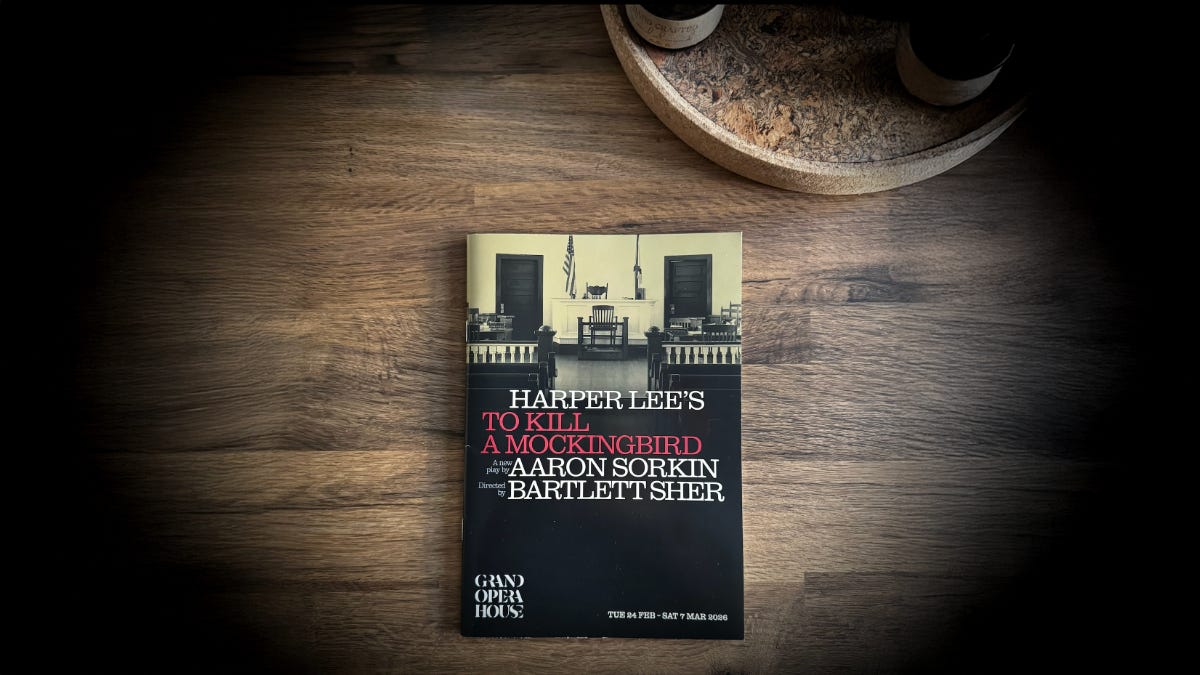
This upsurge in racial hatred made Aaron Sorkin’s powerful stage adaptation of To Kill a Mockingbird feel all the more poignant and urgent. Currently on tour in the UK (the play finishes an eleven-night Belfast run this evening), Sorkin has magically transposed Harper Lee’s landmark text into the key of the theatre in ways that are faithful and novel, familiar and disarming, carefully historical and unnervingly contemporary.
The spare yet inspiring story of racism in a town in the deep American South has resonated with readers since it was written by Harper Lee in the mid to late 1950s. Much of this resonance lies in the lens Lee chose to tell her story, a young and precocious girl observing the knotted world of adults with wisdom, inquisitiveness and disarming candour. Not once does Lee patronise Scout Finch, or break the bond her character quickly forms with the reader.
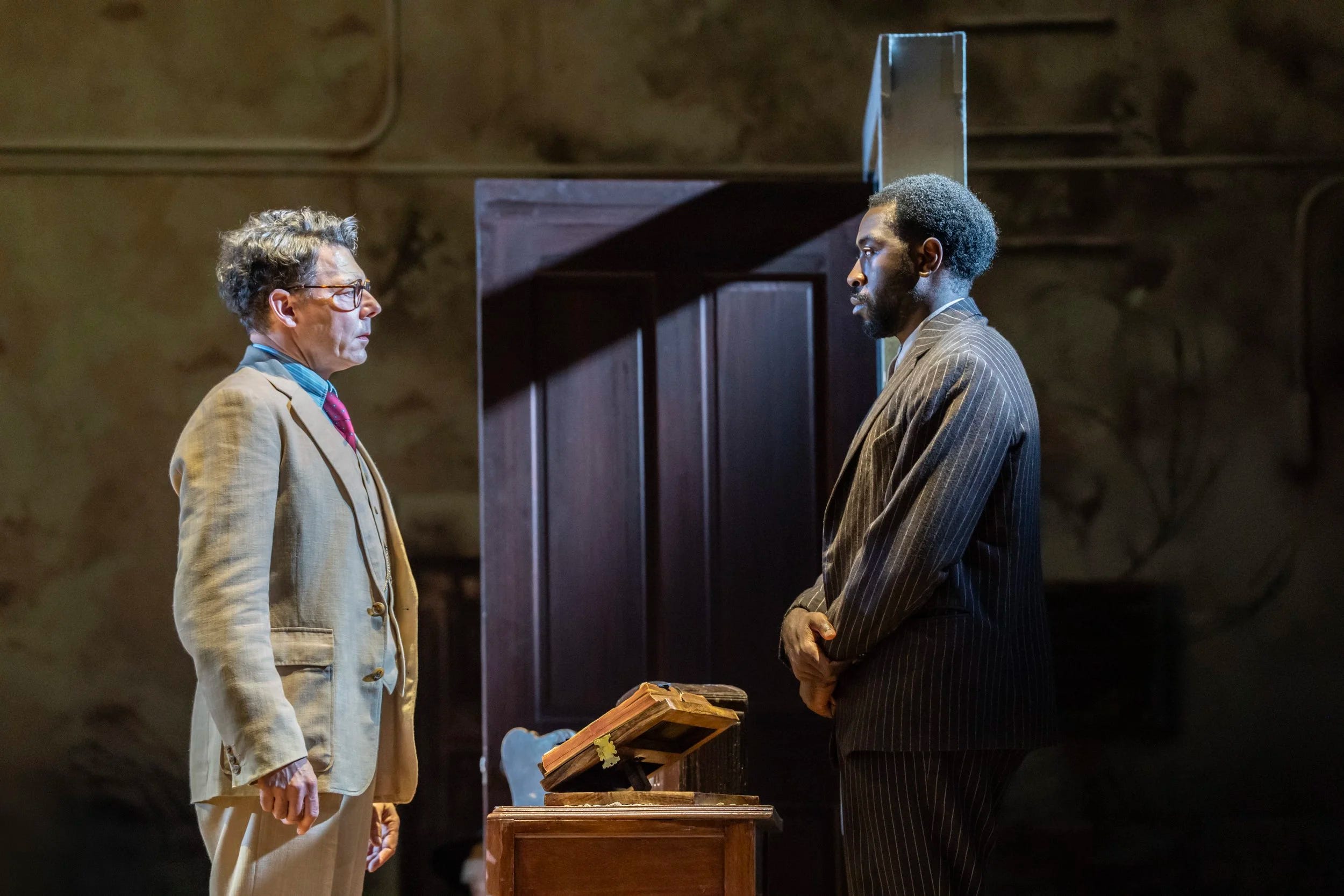
As I anticipated the stage production of the novel, this was the area where I questioned how convincing the adaptation could be. How would Aaron Sorkin tell the story without compromising the youthful filter that Lee had originally chosen? The answer was deeply satisfying, with Anna Munden’s portrayal of Scout embodying the robustness and wonderment that the character brings to the story, alongside her interactions with Gabriel Scott’s Jem and Dylan Malyn’s Dill. Their exegesis of the story from the beginning, and their sense of unravelling the mystery of adult behaviour, captured the naivety and perceptiveness of the story’s young characters without ever feeling mawkish or juvenile.
This, combined with a cast that felt directly exported from the South of the 1950s, with Richard Coyle’s perfectly balanced Atticus, Oscar Pearce’s repulsively powerful Bob Ewell, and Aaron Shoshanya’s bloodied but unbowed Tom Robinson, made the close quarters air of the Grand Opera House quiver with human tension. Miriam Buether’s set design and Bartlett Sher’s distilled directorial work made the story come alive without a hint of ostentation or shrillness.
Having prepared myself for the emotional stretch that the play would be, I found one peripheral element of the evening’s performance particularly moving - the curtain call. Having drawn us into Lee’s plot from a fresh angle, there was a palpable sense of grieving hope in the audience as the play reached its conclusion. The curtain call provided a powerful opportunity for this to find expression. A standing ovation was attended by rapturous applause, sustained whistles and cheers, and a shared sense among the audience that being present for this production was culturally important. No doubt, many of us were applauding the sheer genius of how the play was written, staged and performed, but I am certain that we were also lauding the sentiments of Lee and Sorkin’s social vision, finding a celebratory outlet for the fact that ‘joy comes in the morning’, and that the current normalisation of hatred and prejudice does not need to be our present or our future.
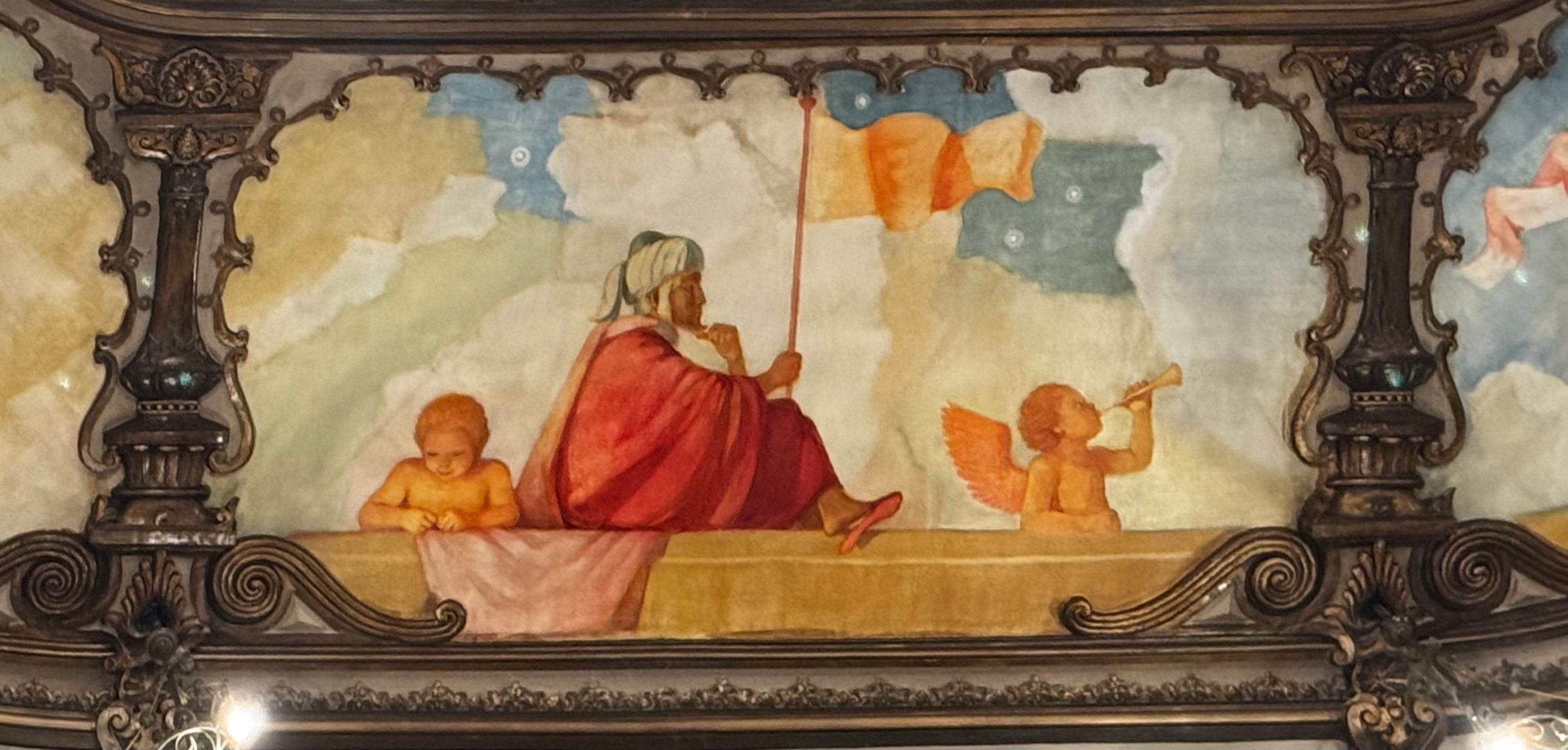
The irony of our location was not lost on me. In a beautiful theatre space that endured the slings and arrows of a bloody conflict centred around sectarianism, bigotry and murderous ‘othering’, the fact that we could stand in this very space and offer loud affirmations of a view of the world that demands charity, kindness, and equality was both reflective of where we could be as a society, and somewhat redemptive of where we have been. One thousand people in an enclosed environment do not register as an opinion poll or a harbinger of a better story for our communities, but the fact that the house has held room for the same drama for 10 nights is an encouraging thing to think about.
All of this speaks to the ongoing importance of the arts in these perilous days. Lee’s story might be set at a specific place and time in American history, but its message endures and is amplified by where our world finds itself in the early twenty-first century. There is something about artistic work that can compel the will, convince the mind and enflame the heart where mere discourse, argument or legislation regularly fails. Harper Lee’s novel has met the twist in our world and in our natures with a gracious and spacious view of humanity for generations, and works such as Sorkin’s adaptation can continue to provide room for exploration and a muster point for hope even in our cynical days.
‘All rise!’ Scout Finch intoned throughout Sorkin’s adaptation of To Kill a Mockingbird, and rise we did. Rise we must.
I saw this in November! Powerful and brilliant adaptation. Great article and thoughts too