
Belfast Reels
Some passing lament and caution on a present terror

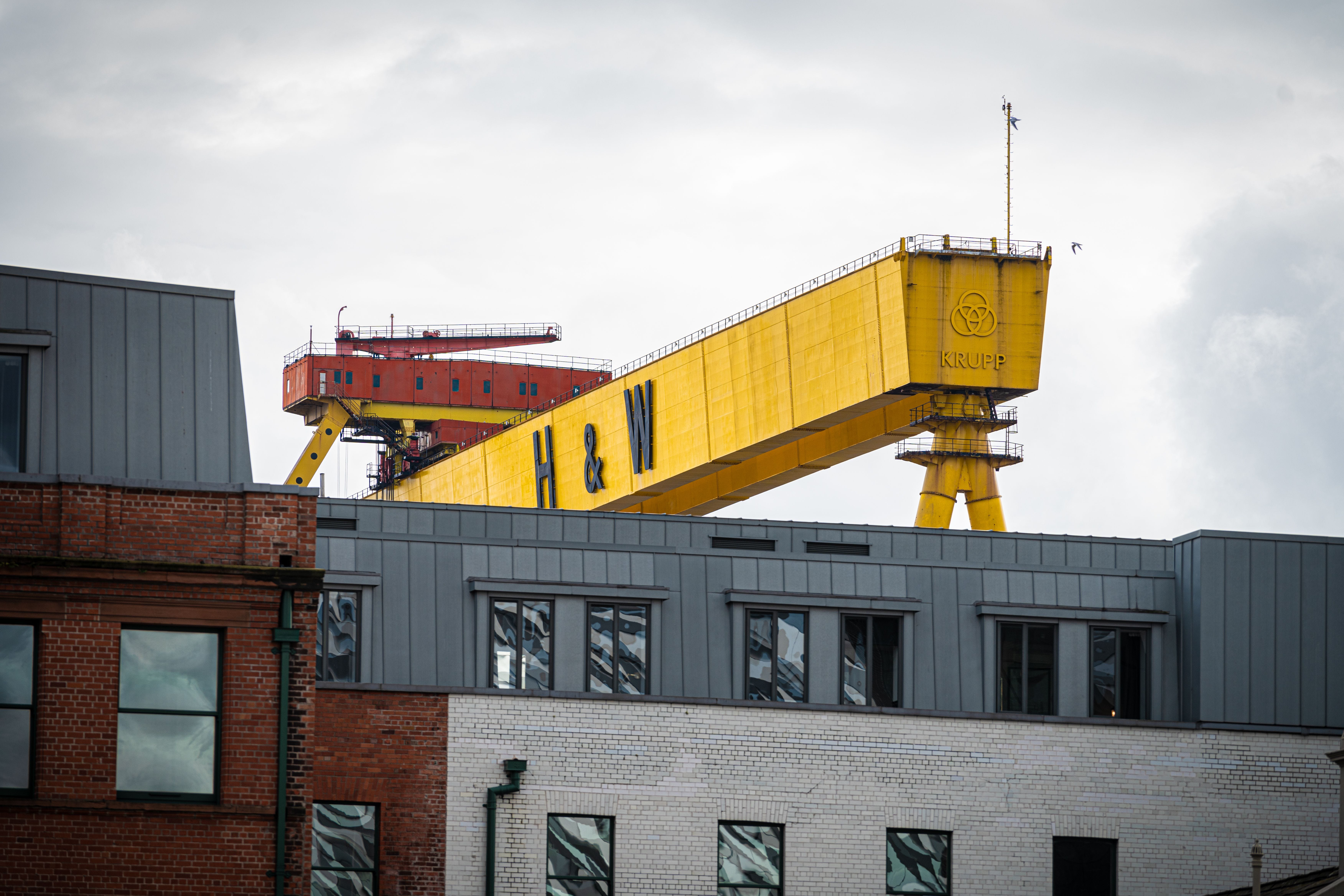
I write these words in a coffee shop in Belfast, where snatches of other people’s conversations filter into my consciousness. A coffee shop is a compendium of episodes, a brief bouquet of biographies that are loosely bound before withering into what and who is next. None of us chooses our company, none of us owns our space, and none of us is certain of what is going on in the lives of those who are physically proximate to us. We can only overhear one another’s stories in such a place, and soon we scatter elsewhere. As with the cafe, so with the city in which I sit, and all cities, I suppose. We are storied strangers, collected and unconnected, seeking company and sustenance and somewhere to be for a while.
Belfast is globally headlined today because of a terrible moment in the west, a man mercilessly mutilated by another in open view, social media making carnival of the violence as only it can. I found my hands trembling as I read the news in full today, and there is a sense in which the whole city is unsettled too. We have witnessed much violence in this place, and it takes a lot to make Belfast tremble. A city of hard edges and girdered histories, its incessant infrastructure has not wavered, though blown to bits at times. But today Belfast reels with a new violence, is unnerved and nervous, craving certainty out of the obscenity of a man’s body being wounded in her streets.
I have argued in the past about the value of holy hesitation, and I stand by those words here. This post is not designed to speculate but to intercede, to offer prose as a prayer against the retributive and reactive, and to urge that lament need not always bring labels and wider perils with it.
Eschewing Everyman
Media outlets, police communications officers and community workers are all urging reticence, and patience with process, a concern that snap judgements are not made, that misinformation does not disseminate. Social media ploughs on regardless, filling the location where light will eventually come with heat and calls to action. The ground on which one man apprehended another with murderous intent becomes a diabolically sacramental space, the transubstantive locus for a whole society’s fears and frustrations, prejudices and principles; a morality play in which are worked out the wrestlings and wranglings of a society seeking to come to terms with itself and with others.
This is the most dangerous of spaces imaginable for all of us, and recognising this reality might just save us from harming ourselves and others. Among the things that our troubled history teaches us, surely the lesson that proxies and Everymen do not work must be one of them. There is a temptation in all of us to view the actions of an individual as symbolic and representative of all who share similar cultural or creedal characteristics, to ‘tar them all with the same brush’, as we say in this part of the world. Such assumptions and conclusions are compelling as they invite us into early certainty while a story is still unspooling; they allow us to position ourselves not just in a position of innocence but of moral impeccability, as none of our own tribe would ever perpetrate such things. These are the lies we might be tempted to believe.
At the moment, we know nothing of the motive behind the attack in west Belfast last night. Perhaps its senselessness will defy explanation and rationale, even with the passage of time. Ideologies or individual issues may lie behind it - we simply don’t know. What is certain is that the terrible conduct that has left a man fighting for his life not many miles from where I am sitting is not a universal behavioural characteristic of those who are new to our shores here. This is a fallacy, a terrible blasphemy of our inherent dignity as human beings. It flies in the face of what we objectively know about the vast majority of our neighbours regardless of their background. The very anguish that such a moment brings proves its irregularity, its outlying nature for every social and ethnic grouping in the city. We can no more tie a man’s cultural heritage to the cruelty of his heart and hands than we can stereotype our own society as one whose history proves that we all love blood and the banishment of our neighbours.
The alleged perpetrator of this terrible act is not Everyman, his is a complex depravity that is all his own. We brand all people of shared heritage, or even of relatively similar skin tone as being the same in spite of what we really know to be true. Of course, wider beliefs govern our treatment of others; ideology can make us murderous, but Northern Ireland needed to invite no stranger to its shores to learn this truth. In truth, we presently know nothing of these factors in this specific incident.
Burning our own, burning others
From experience, these instincts will not find themselves extinguished in the actions of public figures. Northern Ireland becomes febrile around this time of year, our muscles memoried with old protests and counter-demonstrations, the longer days bringing back the smoke-tinged air of the ways in which we once blazed and still do. For the entirety of my childhood and youth, ours was a culture where we burned our own, figuratively and literally. I remember a small band of men and women who urged moderation through such times, and I remember that their voices were not immediately heard or heeded. Louder and less reasoned voices demanded airtime, translated each occurrence through the graceless grid of ‘them’ and ‘us’, understanding as all populists do that atrocity and opportunity almost rhyme.
Our ready transference of this rhetoric from one another to simply the ‘other’ is evident. Over the past few years, bonfires have occasionally replaced the old effigies with new images - immigrants in boats burning at the pinnacle of community celebrations. While anger, lament and confusion are logical and essential at a moment like this one, while there is an urgent need to uphold every right to outcry, we also need to wait and watch our words.
What politicians say in the next few days could either protect or imperil people within the communities they represent. Years of peaceable immigration, thousands of men and women who have joined us on our island and have enriched our whole life experience, may find themselves reduced to effigy, to enemy, to suspected other via careless tweets and media soundbites.
How we need to weep while we wait for further news of a precious person so horrifically violated on the streets of this city. How we need to call for clear thinking from those who govern us about the causes of such crimes and the rightful recompense they warrant. Making this story about the ‘Other’ and seeking to further marginalise those who have felt precarious and exposed in our culture over the last while will serve no one but those who see political and personal gain as the desired outcome from such dread events.
Belfast reels
Belfast reels are all over social media, and Belfast reels in the wake of new blood senselessly shed. We are in shock; we are rightfully angry; we justifiably want answers, and all thinking people will want to know what motives lie behind such murderous instincts. In this impotent space of public outrage, we must steward our own hearts and minds well, refusing the easy stereotypes that once held this city hostage. Waiting, weeping, railing and praying are proper; making others the target of what we so far understand to be one man’s terror never is.
If you have read and benefitted from this article and would like to support my work as a freelance writer, there are a couple of ways to do that. One is to subscribe so that you never miss an article. There is a free option and a paid option, and I would be honoured if you opt for either!
If you’d like to support my writing life but regular contributions aren’t possible, the ‘Buy Me a Coffee’ option allows you to leave a ‘tip’ for articles you have enjoyed. If you would like to do this, you can donate via the button below.