

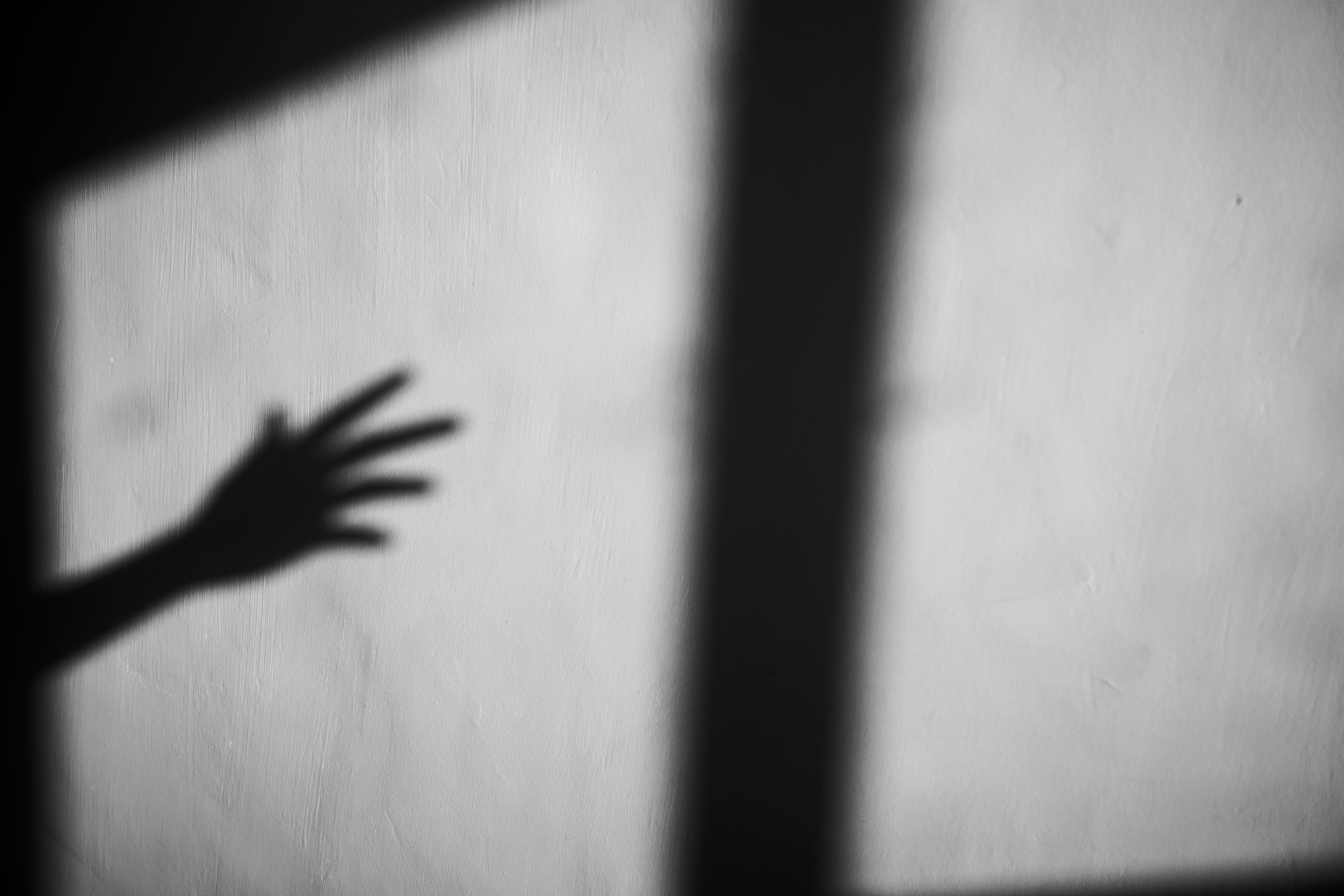
As October takes its darkening exit and November’s descending stairway into winter beckons, we are once again neck-deep in faux death, the doorstep horror show of Halloween unfolding in every neighbourhood, via inflatables, unspeakables and deplorables adorning the otherwise civilised frontage of homes. The death tableau is alive and well once again.
As this season shortly ends and the full bright red rage of Christmas marketing takes its place, I thought it might be helpful to offer some reflections on death that go below the surface a little more deeply than the morbid merch currently on display. The first week in October brought death close to my door for the first time in several years, and while there is danger in speaking too freely out of grief, something of the real-time tough stuff I’m currently facing might help to frame some of the frightfully safe death dealing going on in our culture during Halloween and beyond. In this short piece, I want to reflect on our obsession and squeamishness about the grotesqueness of death and to suggest some ways our current season of the year might reveal our deeper cultural preoccupations. In a follow-up article, I want to think about the practice of naming the dead, and the importance of measured and authentic memorial.
Pig’s heads near the play park
Perhaps it is a symptom of my age, but I find myself baffled by the commercial cult of death that October brings. There is so much horror and unpleasantness wreathing homes, offices, and public buildings that it is all too easy to normalise it. Out for coffee with family, the otherwise beautiful cafe we ensconced ourselves in was replete with realistic-looking severed human heads strung across the ceiling, neck sinews and gore providing the backdrop for americanos and muffins. Outside, an angry-looking skeleton missing an arm and a leg was attempting to scale the front wall. On the journey home, the front garden of a house was packed with Halloween inflatables, one of which was a rotund Grim Reaper, channelling Santa vibes, the only difference being that his gift is death. Our local shopping centre has a life-size cutout of the Grim Reaper with a face hole for adults to pose for photographs in, and a lower hole provided so that we can include our kids in his mock visit. I really don’t know, so it’s best not to ask me.
Every year it seems that we are making more and more of the macabre, dialling up the death tone, getting bloodier and murkier and braver with how we decorate our lives. The only problem we have is that this is entirely synthetic, a safe-distance death cult with pretence and bluster at its base. In truth, we don’t really want to deal with death.
A gross illustration of this took place in Co. Down today, around 40 minutes from where we live. Overnight, some people sneaked into a popular park which fringes the Mourne Mountains and put on a display of (real) severed pig heads, some on sticks, all of them bloodied. The reaction was (justifiably) strong and outraged, with local councillors denouncing the sick individuals who placed such things in the path of families out to enjoy Halloween. I wholly agree with this sentiment, but have to observe that the only criteria for rejecting such displays is when they contain actual viscera. This is the paradox of our death cult in a (monkey) nutshell.
Consuming and consumed
I am certain it would take the work of a skilled sociologist to truly unpick and unpack what we are doing with all of this death merch, but I have some outline thoughts of my own. Predominant among them is that our October foray into horror is an exercise in control and consumption, a brave placarding of the fact that we’re not really afraid, that we can make merry at the mouth of the grave, and that fear is not truly a factor for us anymore. Pinning superstitions to the walls of our homes is a great way of declaring that we don’t really dread these things, that there is nothing to be scared of, no dark sacred space which we need to avoid. We can make a holiday of the horror of death, harrow hell for ourselves via the plastic products aisle in Home Bargains, and make mortality one more commodity that lies within our reach and under our authority. We have decided to crush the serpent, not via a Messiah, but via money and garish decor.
In spite of this, we remain vulnerable to death; we cannot consume it because ultimately it will consume us. Death is utterly unlike the exaggerated glamour of the grotesque our world is peddling; it is the silent insinuation of a force we cannot hold back into the areas of our lives we hold most dearly. It is a stealthy intruder that can rob us in an instant of those we love, the security of friendship, the certainty of our own next day. Death does not come draped in a dark cloak, but instead drapes our world with pain and panic, and partings that we cannot by ourselves rejoin.
Death is not an ogre, but an aftertaste, shaping itself into the shocked numbness of recognising that this person we love is now lost to us in time. We are consumed in the midst of our years; death comes into the midst of our lives. It will not respect our timetable; it will not take the guises the marketplace offers, and it cannot be packed away at our whim when we decide that Advent is now on the cards. Death is unscaleable, unthinkable, alien, unwelcome, insistent, a festering and formidable shadow smudging the fringes of our lives before taking the centre and breaking our hearts.
We might want to be death consumers, entering into the spirit of October, but we are death-consumed, and nothing merely human can take us from the grip of this. We might portray death as we wish, but we are not truly naming it in the process.
Hope through lingering loss and risen life
Readers of New Grub Street will be aware that I lost my best friend a few weeks ago, and that I conducted his funeral on Monday past. I have been discombobulated by his sudden departure, knocked off balance by his not-here-ness every day. I am allowing myself to feel this, and to grapple with the tears and fears that such an experience brings.
But in the midst of this, I am discovering again that the only way to deal with death is to trust the one who has put death to death. I have been reading Matthew McCullough’s excellent book Remember Death (published by Crossway) and have been grateful for the cold eye and warm heart that the volume brings to bear on the Last Enemy. McCullough is helping me to face the reality of loss, and the brevity of life while pointing me again and again to Jesus as the only means of truly coming to terms with mortality, my own and that of those I love.
Believing, as I do, that Jesus rose from the dead allows me to do away with the mass-produced plastic ephemera which parades as death positivity in our culture, and to feel the full dread weight of death’s entrance into the world. The gospel relieves me not just of fear when it comes to death but of flippancy. The message of the gospel reverences the heart-rending reality of our short days but only through the prism of the Christ who has put death to death in his death and resurrection and who promises a rising beyond the battle we wage with the Last Enemy.
Death in the worldview of the gospel is not small, but a silent, unseen giant who dwarfs our attempts to tame him. Only heaven’s champion, only the God-Man, only my beautiful, powerful, victorious Jesus can allow me to see this reality and not give up or give in. His defeat of death is no mean feat, no small things, but the reversal and ruin of what has ruined us since Adam.
I am grateful in this season of grief not to need to rely on trifles and trinkets, toys and talismans that fetishise death, but to have recourse to my risen Redeemer. He allows me to name death, to hold realistic views of what it means, and then reaches a nail-scarred, heaven-transfigured hand to me, and beckons me to deeper belief in his powerful work. My hope for you, dear reader, is that you have this same confidence this same realism through faith in Christ. If you do, isn’t it glorious, even when our hearts are breaking? If you don’t, let me urge you to explore what life and death truly look like, as seen through a Saviour who came to deal death’s death blow.
If you have read and benefited from this piece or other recent articles and would like to support my work as a freelance writer, there are a couple of ways to do that. One is to subscribe so that you never miss an article. There is a free option and a paid option, and I would be honoured if you opt for either!
All of my content is original and makes zero use of AI in its production. I am grateful that New Grub Street is 100% human! Your moral support encourages me to keep at it, and your financial support opens up time for me to give myself to the research and writing that appears here and in other places too. I am so grateful for your partnership.
If you’d like to support my writing life but regular contributions aren’t possible, the ‘Buy Me a Coffee’ option allows you to leave a ‘tip’ for articles you have enjoyed. If you would like to do this, you can donate via the button below. Please note that ‘Buy Me a Coffee’ donations do not grant access to archived posts.
Thank you for these well-written ponderings. I’m so sorry for your loss, but thankful you know where to find true comfort.
I just lost a dear friend this weekend, and these words hit home...it is a glorious reality, isn't it?