
Getting Medieval Pt.2: Some Background to Piers Plowman
Basic bearings for reading a fourteenth century poem

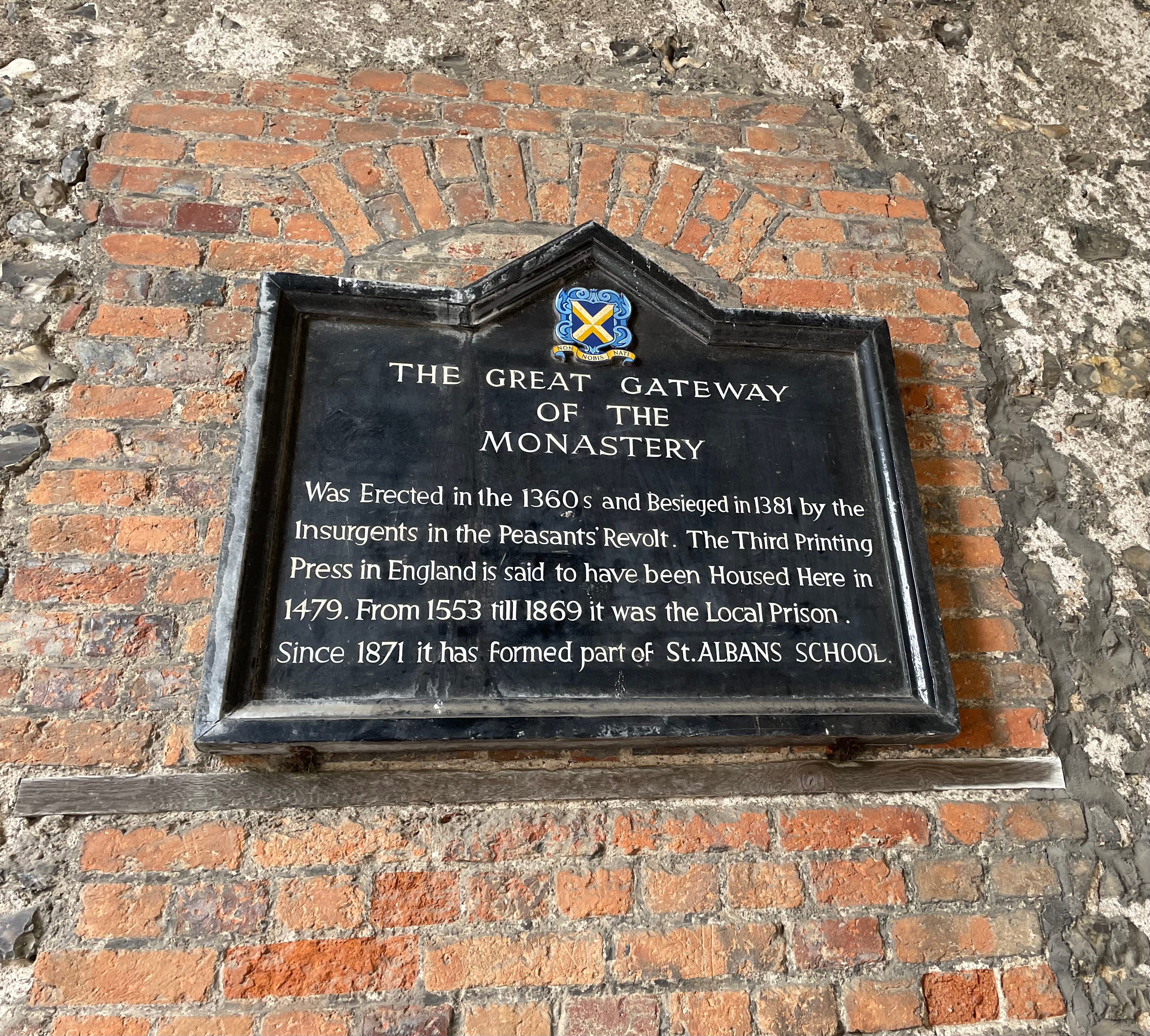
A few summers ago, I was taking a walk in St Albans when my attention was arrested by a wall plaque in the Great Gateway of the monastery that lies on the fringes of Verulamium Park. Tracing the gateway’s construction back to 1360, the sign also referred to an event which had occupied quite a lot of my academic study over twenty-five years previously - the so-called 1381 Peasants’ Revolt. In an instant, I was transported back to my days of reading poets like William Langland and John Gower, while marvelling afresh at the historical depth of England’s places. It felt surreal to be accidentally standing on the spot where many of the fourteenth-century’s political and social concerns found a distillation point.
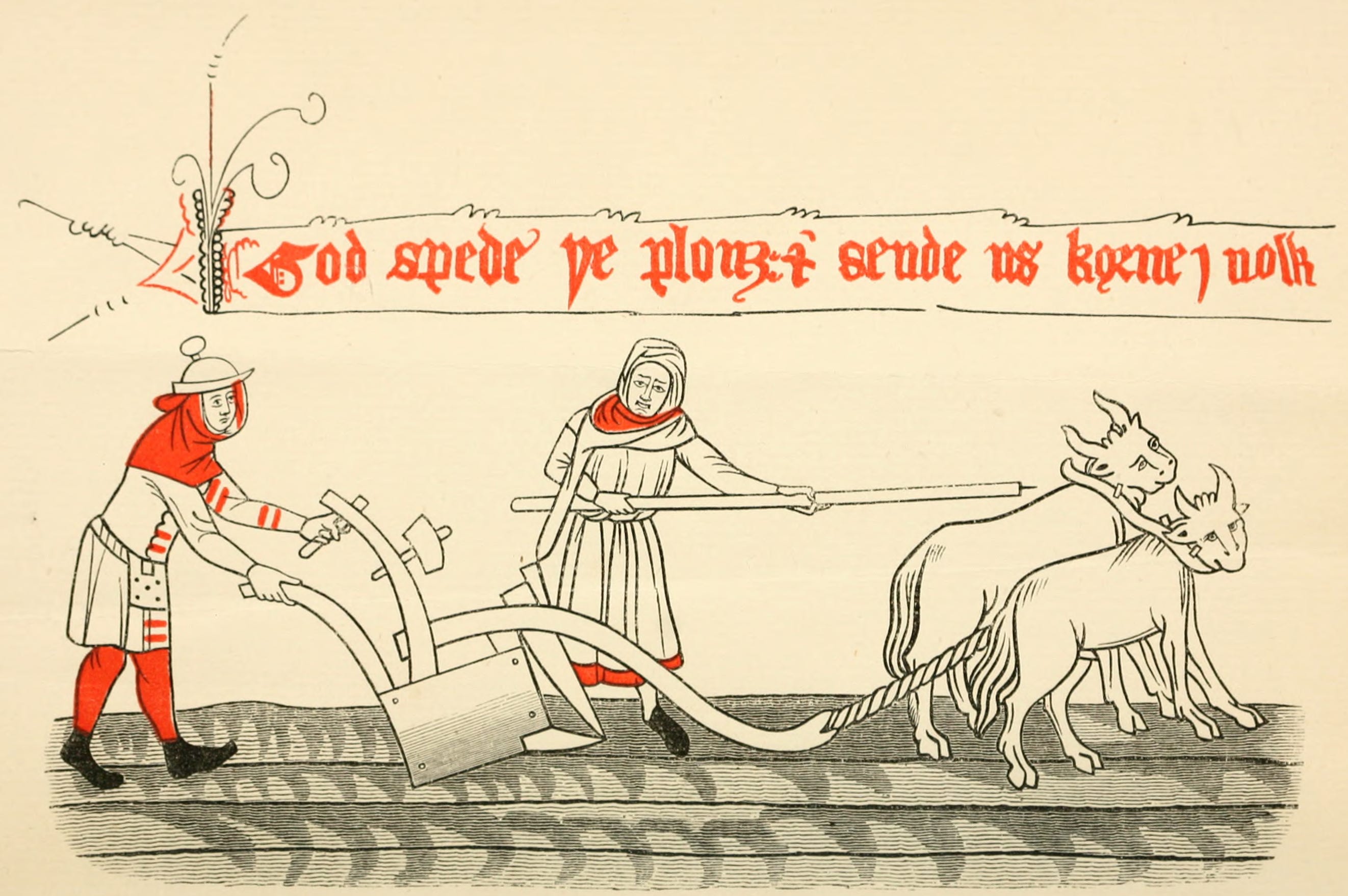
In this series of articles on medieval poetry, specifically William Langland’s Piers Plowman, the events, concerns and social structure of the fourteenth century will form an important backdrop. Even the quickest read through the poem will reveal that Langland was a socially aware writer, with an active conscience about the blessings and abuses of the age in which he lived. In this second instalment, I simply want to lay out some basic facts about medieval society, some immediate context from the fourteenth century, and some concise pointers about how to get started in reading Langland’s work. Next week, we will begin to dig into the structure and content of the poem itself.
The Times They Were A-Changin’
Perhaps no era of history is more widely misunderstood or more badly caricatured than the medieval period. From its characterisation by later generations as a ‘middle’ or ‘dark’ epoch, to the term medieval standing as shorthand for barbaric or unenlightened behaviours, the period running from the fifth-century to the late fifteenth-century often stands as a no man’s land to many people. Add to this the inherently comical portrayal that peasants and knights receive in film and media, and medieval can quickly become a term that is loathed or lampooned depending on context.
As with any broad historical marker, ‘medieval’ is a term that covers an impossibly long, complex and varied period. As Ian Mortimer has highlighted, the world of 1500 would have been unintelligible to someone from the year 1000 in almost every respect. This variety has led scholars to divide the period into three further eras: the early Middle Ages, the High Middle Ages, and the Late Middle Ages. Marking differences between these times is a fascinating exercise, but not one that I can take up in detail here, sadly.
For the purposes of reading Piers Plowman, the key historical period to have in mind is the fourteenth-century. In forthcoming articles we will draw quite a bit on the scholarship of Barbara Tuchman and her description of this century as ‘calamitous’ seems appropriate. The historical period from which Piers Plowman emerged was one of tumult, change, and disruption in almost every area of life - from challenges to the feudal structure of society (more about that below), to natural disasters and political uprisings, the fourteenth-century was a time when few of the old certainties of life remained intact.
The early part of the century was marked by changes in the climate that presented a threat to human flourishing. The concept of ‘climate change’ actually arises in the text of Piers Plowman itself, and we will explore this further in later instalments in this series, but the beginning of the ‘Little Ice Age’, the widespread failure of crops, and the mismatch between high population and low food production brought medieval Europeans into terribly difficult straits.
Later in the century, the outbreak of the pandemic, later labelled Black Death, but known at the time as ‘the great mortality’, led to the death of almost one third of England’s population. The dreadful symptoms and the seemingly uncontrollable spread of this disease not only led to widespread human loss but also to societal disruption and disjunction.
Added to all of this was a shift in some of the basic building blocks of society. The feudal system relied on three estates: the clergy, the nobility (think medieval knights) and the commoners (which could take in anyone from merchants to peasants). The basic energy of this system is brilliantly captured by Tuchman: ‘the clergy were to pray for all men, the knight to fight for them, and the commoner to work that all might eat.’1 As we will discover through the text of Piers Plowman this hierarchical and seemingly ‘holy’ order was breaking down during the fourteenth-century, a fact that Langland’s poetic vision captures and critiques. Issues around taxation, for example, resulted in participants in the so-called 1381 Peasants’ Revolt invoking the name of Piers the Plowman as part of their revolutionary language.
Although there is so much that separates us from the fourteenth-century, the era is not an entirely foreign country to us. Living as we do at a point in history where many of our moral, social, political and existential functions are shifting beneath our feet, devoting our minds to a poem which navigated a similarly (and more!) unsettling era can be a true help to us. Again, Barbara Tuchman writing in the 1970s invites her readers to connect their own lives with William Langland’s world,
After the experiences of the terrible 20th century, we have greater fellow-feeling for a distraught age whose rules were breaking down under the pressure of adverse and violent events. We recognize with a painful twinge the marks of “a period of anguish when there is no sense of an assured future.”2
It could be argued that our points of connection in 2026 are even greater than when Tuchman was undertaking her research. As we delve into Piers Plowman we will find ourselves repeatedly disoriented by how different Langland’s world was, while simultaneously finding profound points of pastoral contact with the things that concerned, perturbed and inspired him.
Entering the field
As later articles are published here, our historical understanding of the fourteenth-century should widen and deepen, and the text of Piers Plowman will be crucial to this. For those using these articles as a guided reading of the poem, it would be a great idea to begin to dig into Langland’s text, beginning with the prologue to Piers Plowman. We will focus on this part of the poem as part of next week’s article, and it really helpfully introduces us to themes that we will explore and extrapolate across this series.
There are a few things worth keeping in mind as you begin to read Langland. Firstly, you can understand and connect with this poem. Piers Plowman is a text from another world, and as you commence reading, you may quickly find your confidence taking something of a battering. Can I really read this, even in translation? Can a poem from this period speak to me, or is this just an exercise of historical abstraction? Those kinds of questions (and many others) can trip us up.
Grasping the fact that Love and Truth are at the heart of Langland’s poetic enterprise, and that his work is an open-hearted reaction to a world in flux, can be a guiding light, even through the more confusing sections of the poem. I have found myself deeply moved by Langland’s intellectual honesty, his social conscience, his sincere devotion and his heart for societal justice. Focusing on these virtues and concerns can help us when we are tempted to get bogged down in the details.
Finally, as you begin to read the poem, abandon all sense that this is a single story or allegory with one plot line all the way through. Medievalist Laura Ashe has compared the poem to Christopher Nolan’s film Inception, and this feels like a great comparison. Piers Plowman is a dream vision, a kaleidoscopic look at the world of the fourteenth century, whose very frame and form reflect the shifting sands on which society found itself in that era. If you feel confused at times, it is not owing to stupidity on your part as a reader, but sensitivity - that very sense of discombobulation is exactly how you are meant to feel as you read a poem that sets on a pilgrimage in search of Love and Truth in a world where both of these virtues are obscured and confused.
Next week, we will begin to look at Langland’s life, the shape of his poem, and some of the incomparable literary beauty that Piers Plowman holds in store for us.
Tuchman, Barbara W. 1979. A Distant Mirror : The Calamitous 14th Century. New York: Knopf., p.42.
Tuchman, p.16
I am looking forward to learning more about this poem and an era which I’ve had very little exposure to. Thank you for putting this together, Andrew!